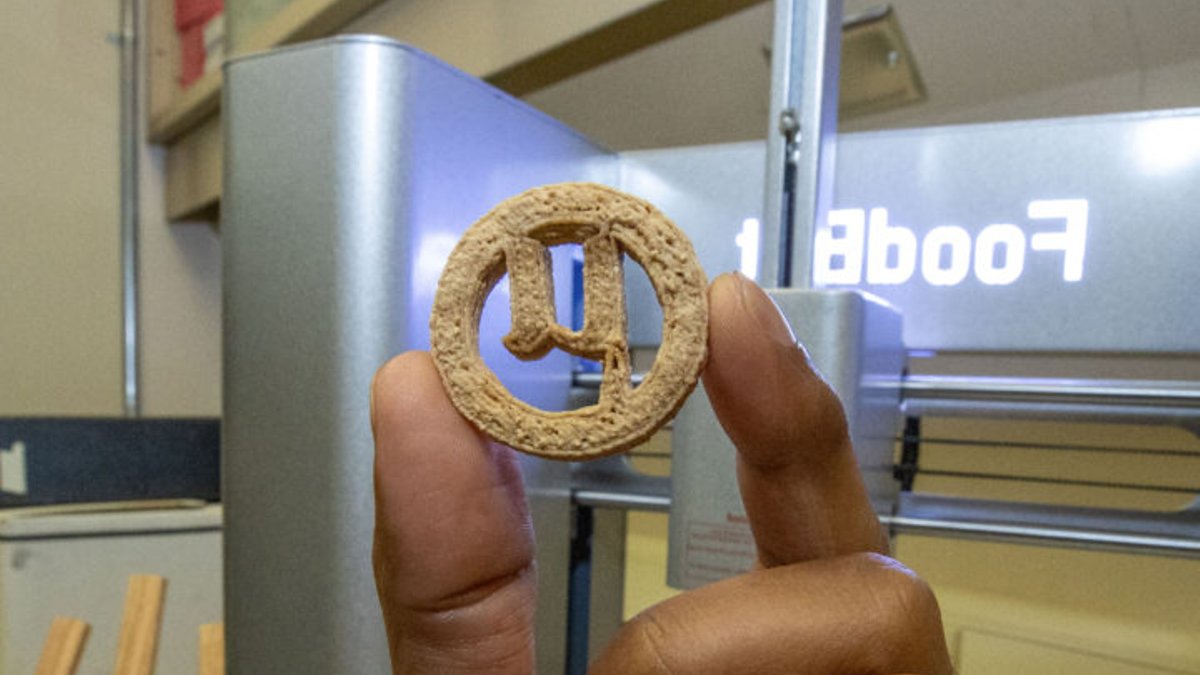
Scientists at Southern Illinois University Carbondale have engineered a process that converts plastic pollution and agricultural waste into edible, protein-rich cookies. The researchers presented the findings at the fall meeting of the American Chemical Society in Chicago on Monday, detailing how engineered yeast transforms common plastic into food ingredients. The resulting product is called µBites, or “microbites,” and represents a novel approach to both waste management and food security.
Breaking down plastic
The team used polyethylene terephthalate (PET), the plastic found in drinking bottles, alongside discarded corn stalks and leaves. These materials were subjected to an oxidative hydrothermal dissolution process. This method uses water and oxygen under high temperature and pressure to break down tough materials into smaller pieces. The resulting fragments are then fed to specially programmed yeast, which reassembles the carbon molecules into proteins, fats, and acids. They then combined these microbial byproducts with fiber, starch, and sweetener, using a 3D printer to form the cookies.
Related: Trump unveils redesigned White House Rose Garden
“We were trying to develop technologies for plastic upcycling to make more valuable products,” says Lahiru Jayakody, a professor at Southern Illinois University. “We thought, why not focus on making food? Because plastic is carbon and food is carbon. Microbes are very clever — so we are using their traits to solve the problems we created.”
The project was part of a NASA Deep Space Food Challenge, which concluded in 2024. The goal of that challenge was to develop food production methods suitable for space exploration missions. Jayakody notes that the microbial process offers significant flexibility. It can operate on a large scale to feed the general population or in confined areas like a spacecraft or submarine.
A protein source for the future
Global food demand is projected to rise by 35 to 56 percent by 2050, coinciding with rising risks of hunger for a portion of the world’s population. Jayakody believes microbes offer a solution to this looming crisis.
Related: The Most Common Errors to Avoid After an Injury
Participants in the study reported that the cookies smell good. They indicated they would eat one in a resource-limited situation, though the researchers are waiting for final approval before conducting a formal taste test. Jayakody acknowledges the psychological barrier of eating food made from plastic. “You are eating micro- and nano-plastics everyday,” he said. “But of course with this, we are making it into a protein that you need.”
The cookies are currently in the proof of concept stage. The team hopes the technology will be ready for consumption within a few years. They suggest the ingredients could eventually be used in other biomass types, though this has not been tested yet.

